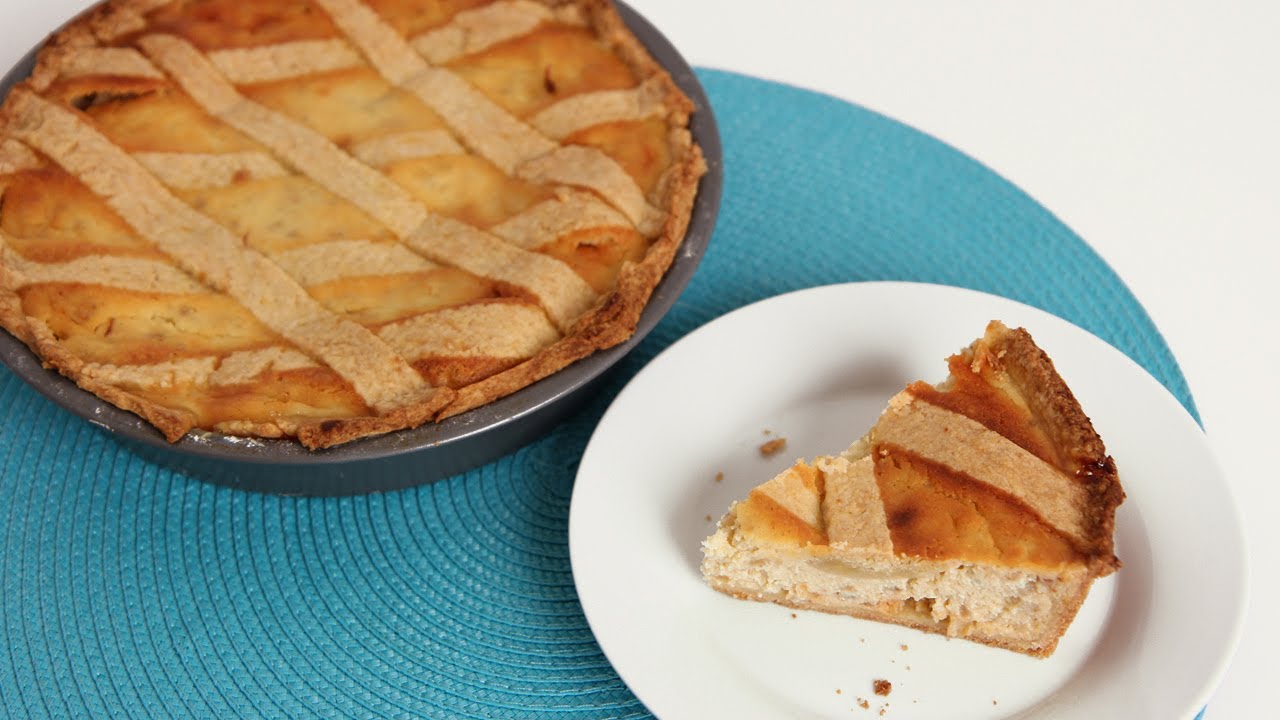
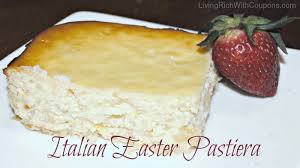
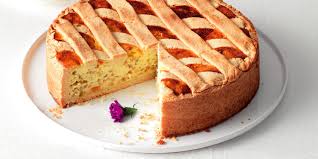
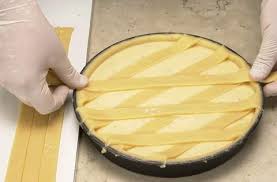
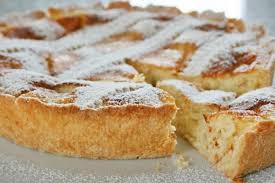
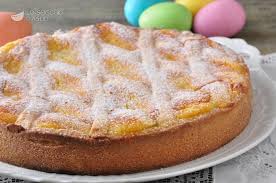
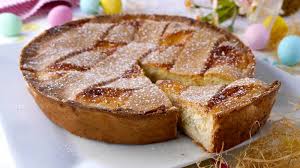
The modern pastiera was probably invented in a Neapolitan convent. An unknown nun wanted that cake, symbol of the Resurrection, to have the perfume of the flowers of the orange trees which grew in the convent’s gardens. She mixed a handful of wheat to the white ricotta cheese, then she added some eggs (symbols of the new life), some water which had the fragrance of the flowers of the spring time, candied citron and aromatic Asian spices.
Traditional Pastiera
We know for certain that the nuns of the ancient convent of San Gregorio Armeno were considered to be geniuses in the complex preparation of the Pastiera. They used to prepare a great quantity for the rich families during Easter time.
Traditional Neopolitan Easter “Pastiera” Pie
There are two different ways of preparing pastiera. In the older method the ricotta is mixed with the eggs or with the grain.
Easter Pastiera Napolitana
In the newer version thick pastry cream is added, making the pastiera softer. This innovation was introduced by Starace, a Neapolitan confectioner with a shop in a corner in Piazza Municipio (Neapolitan Town hall square).
Easter Pie – Pastiera
The pastiera has to be cooked some days in advance, no later than Holy Thursday or Good Friday. This is essential to allow the fragrances to mix properly and result in that unique flavor.
Neopolitan Pastiera
The Pastiera is not only cooked but also sold and served in appropriate pans called “ruoti”. This is because it’s very fragile and would easil;y crumble if removed from the “ruoto”.